Bong POS
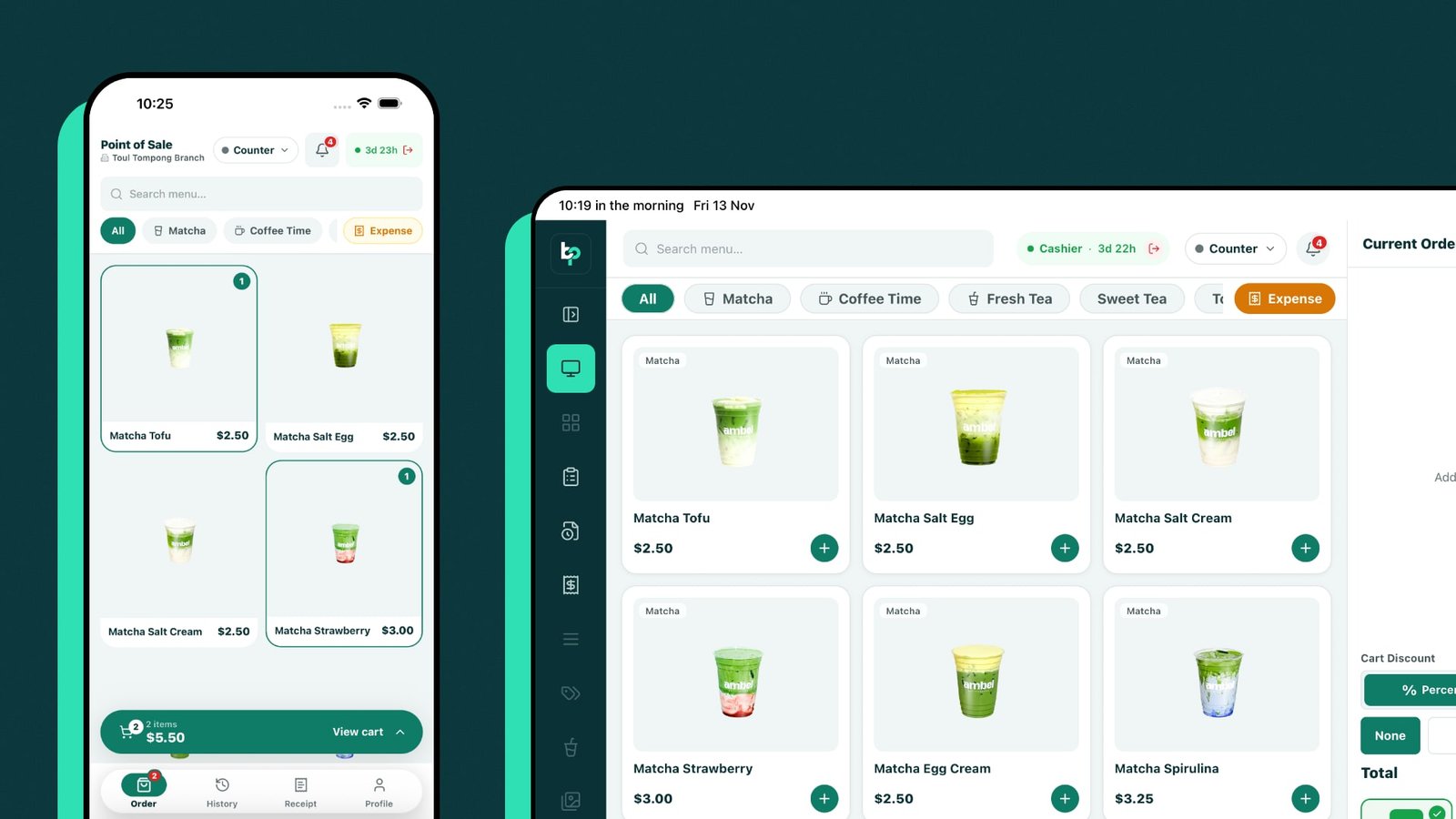
A multi-tenant point-of-sale system for cafés and restaurants in Cambodia. It works offline, across branches, in two currencies.
Project Overview
Solving Real Friction
Prices That Change by Channel and Branch: The same latte cost one price at the counter, another on Grab and a third at the airport branch. Owners kept separate price lists and cashiers guessed.
A layered price resolver where the most specific price wins: branch + channel, then branch, then channel, then sale price, then base price. Each branch can also stop selling individual items.
The Internet Drops Mid-Rush: When the Wi-Fi goes down at lunch, a cloud POS stops taking orders.
Each terminal downloads an offline bundle: the full menu with that branch's prices already applied, plus payment settings and the exchange rate. Every offline sale carries a client-generated reference, so a retried sync never creates a duplicate order.
Two Currencies in One Drawer: Cambodian shops take dollars and riel in the same sale, so closing the drawer meant converting by hand.
Shifts open and close with separate USD and KHR floats. On close, the system works out the expected cash per currency, including cash-in/out and expenses, and shows the difference from what was counted.
Many Phones, One Printer: With several waiter phones and one thermal printer, orders printed twice or not at all.
Each branch registers one main device as its print station, and that device sends heartbeats. When another device takes over, the old one stops printing. Waiters get a warning when the printing device goes quiet.
Order Numbers Nobody Could Read: Customers need a short number to call out. Accountants need a unique one. A generic POS gave neither in the shop's own format.
Order numbering is set per branch: prefix, date, padding, daily or monthly reset, and wrap cycles shown as numbers, letters or Roman numerals (PP-20260513-II-0001). Numbers are allocated atomically even when orders arrive at the same moment.
Many Shops on One Platform: Hosting many businesses on shared infrastructure risks one shop seeing another's data.
Tenant isolation is enforced in the data layer, so every query is scoped to its business automatically. The platform owner manages clients and subscriptions but cannot read a shop's menus, orders or payments.
Licensing Devices Without Locking Out Staff: Per-device billing has to block unlicensed tablets, but a broken tablet can't leave staff unable to work mid-shift.
Each subscription has a number of device slots and starts with a 14-day trial. A removed device can be reactivated when a slot is free. A broken device is swapped through an approved replacement, which retires the old one for good.
Core Architecture
Deep dive into the specialized systems engineered for this project.
Visual Index
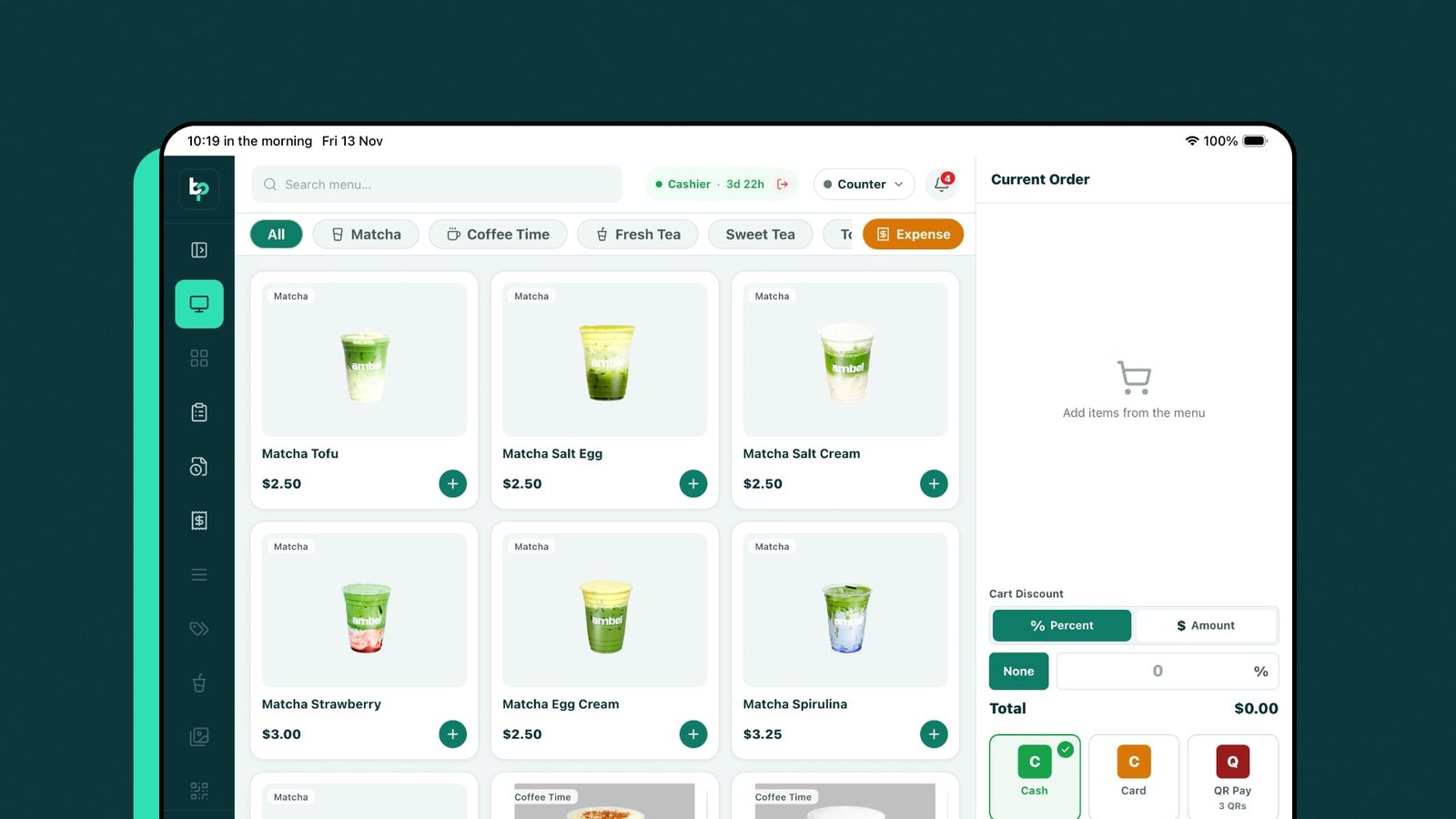
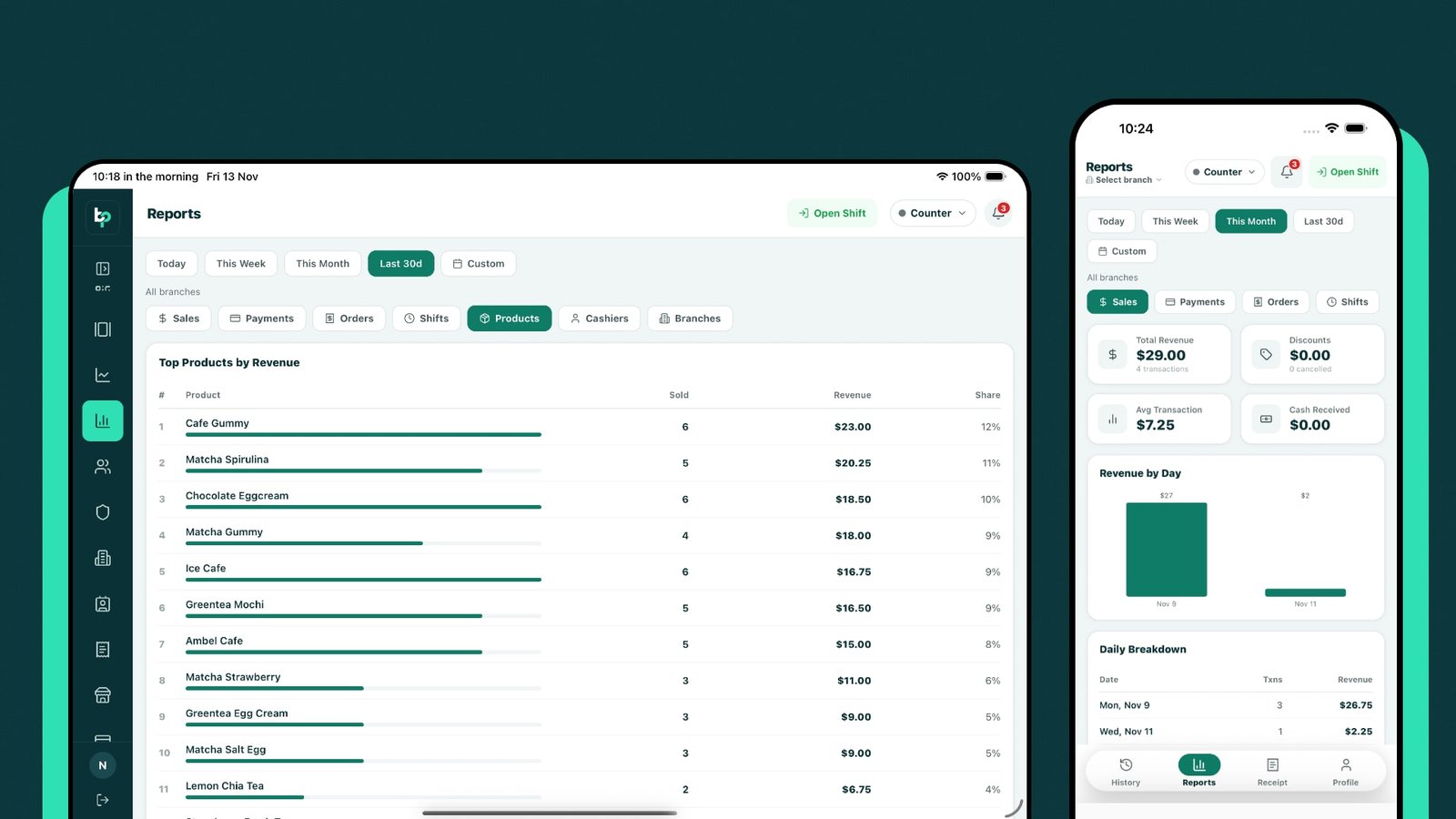
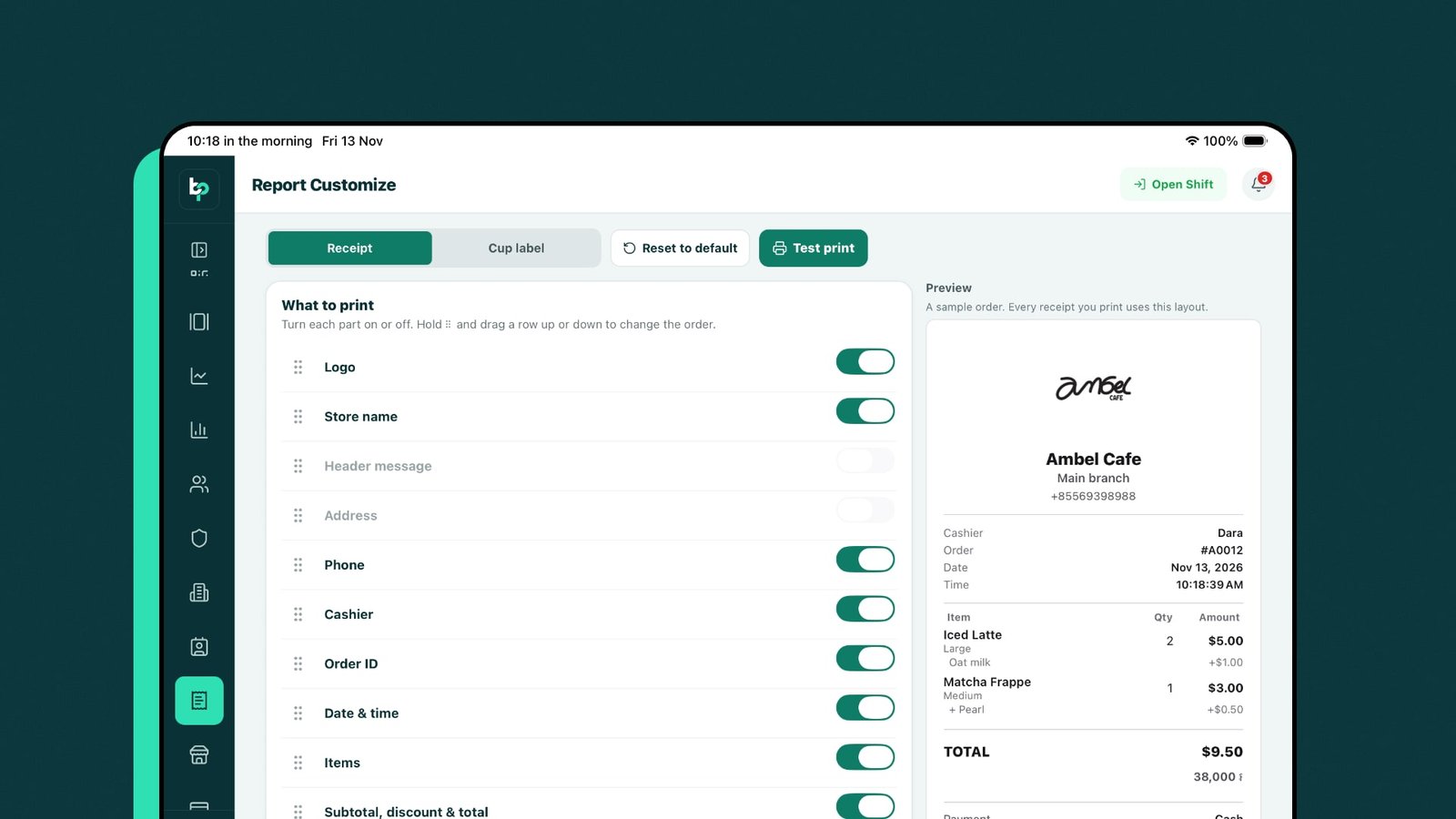
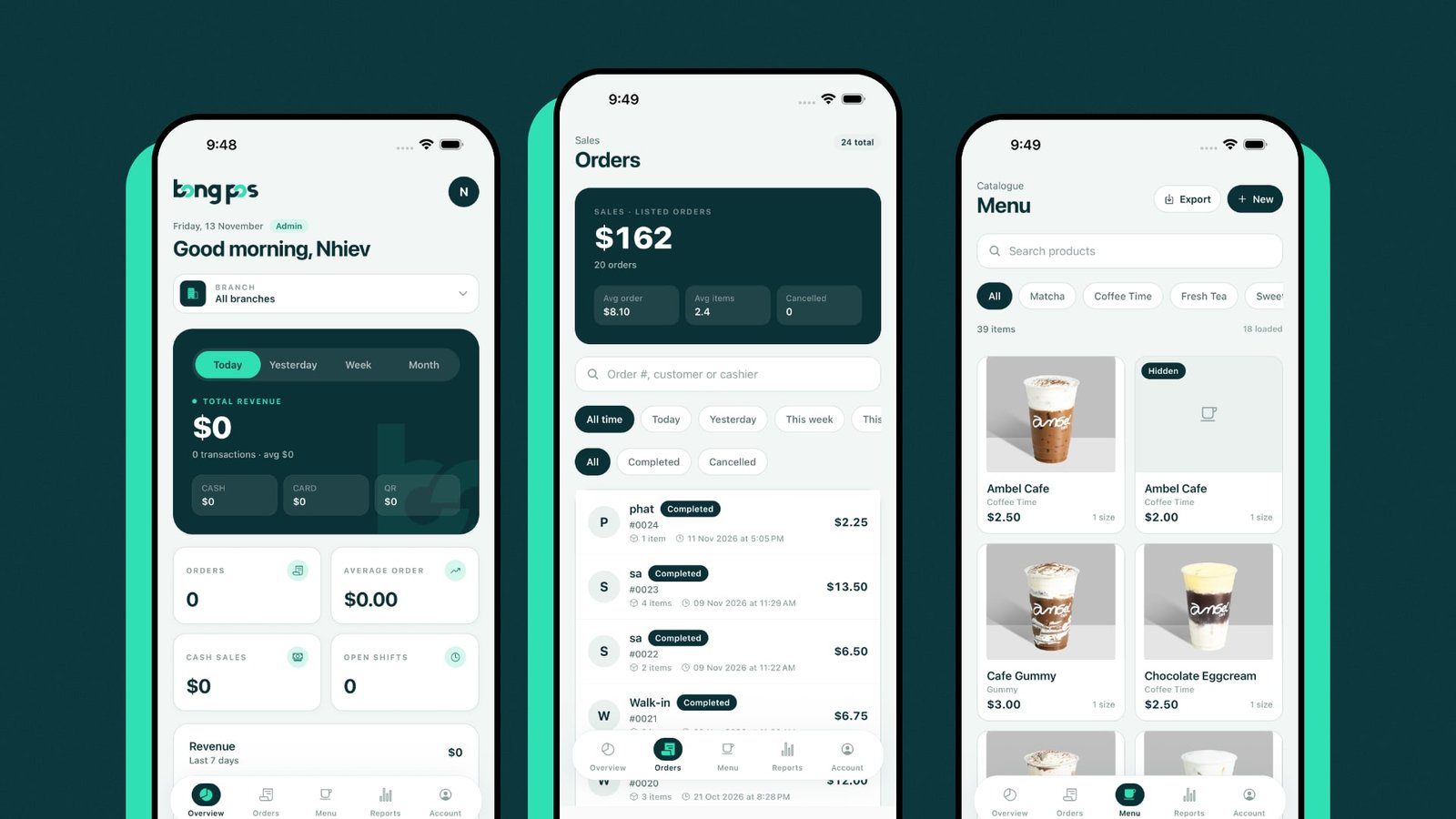
A curated selection of interface modules and design system assets (01-04).